Whooph Learn. Pay What You Want.

Introduction to Trading Methods for Investors
Welcome an Introduction to Trading Methods by Whooph. In 2020-21 during the Covid Pandemic, popularity of Trading surged! An anxious 30 Million new traders opened trading accounts. Trader participation increased 25% in 2021. So, how many of them succeeded? Whooph teaches swing trading to help Investors "LOCK IT IN", trading for income, risk control, trading tools using the Whooph Trading Methods guide and ebook.
INVESTINGMONEYTRADING METHODS
Charlie Whooph
12/7/202413 min read
Introduction
Creating anything that didn’t exist before is a rush. Create income out of thin air? Seriously — it’s empowering. If you are intrigued by the idea, you're not alone. Over 31 million new would-be traders have opened new accounts since 2020.
So, apparently there's quite a bit of interest. I’m anxious to be able to pass along a few secrets on the business of trading!
And there's good news. For those who treat the activity as a business which amounts to 1 out of 5, swing trading makes for a unique and wonderful profession.
Who is Charlie Whooph?
Whooph (noun) def: Is the sound of money leaving your account when you missed the signal to SELL.
Point is, have a valid trading METHOD.
I began trading in 2001. As an engineer, with US Naval officer training, and background in Engineering Risk Consulting, I knew little about how to trade profitably, let alone consistently. But I knew that successful traders require two things: risk control and a swing trade method which delivers reliable BUY and SELL signals.
As time went on my theory evolved. Trading successfully was about the method and risk control happened as part of the method.
Trading was never about money for me, it was about something much bigger more valuable. Discovery of a definable method with repeatability.
Odds of Success
I began trading in 2001. Schooled in engineering, black shoe on the USS Forrestal (CV-59) aircraft carrier as a Navy Officer, and finally an Engineering Risk Consultant, I knew that trading successfully was about risk control and required a valid method.
I was intrigued, but I wanted to know what are my actual odds of success as compared to the odds of starting a business or becoming a doctor or lawyer. Perhaps you've also wondered:
What are my odds of trading professionally? And let me qualify. I'm not referring to the day-trading fools trading with their hair on fire. I talking about the pros who wield a METHOD and know how to make sense out of chaos!
How doable is trading? Without the gambling! Creating income out of thin air, via market fluctuations. Creating income without having to market or drum up "business" or make a single product sale.
A Lot of New Interest
We've come a long way since I researched probabilities of success and profitability back in 2001. Methods became refined. Trading online became available, but profitability came only to 1 out of 5. Not for everyone.
Then February 2020 hit us with COVID.
In 2020, a wave of retail investors entered the stock market. In the last two years approximately 30 million new retail investors or traders opened accounts in the U.S. Wow, that's a lot of interest or Fear Of Missing Out!
So, how did these new traders do?
After all it's relatively simple. (Yes, I'm being sarcastic.)
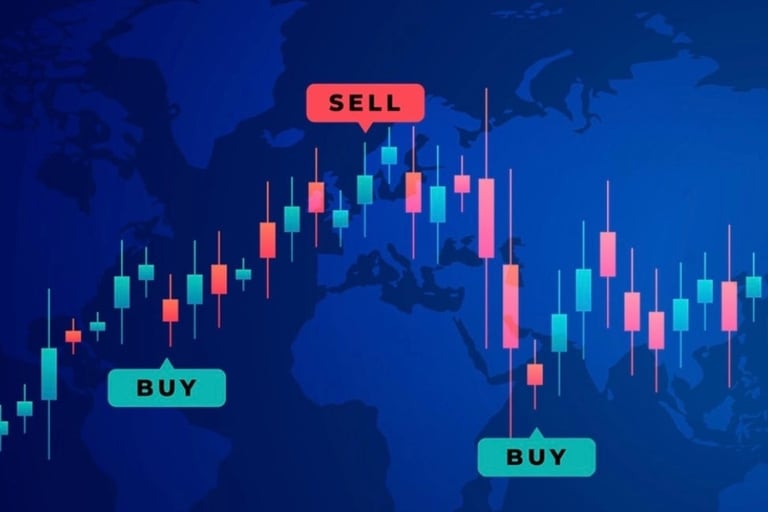
We all know the general concept is to Buy LOW, Sell HIGH, right? Or in a downtrend, Sell HIGH, Buy LOW - simply reverse order. Obvious to the most casual observer! What's so hard?
The idea of the Swing Trade is of course, BUY LOW and SELL HIGH. Swing Trading isn't just "one style" of trading or investing... It's the goal of anyone intending to profit in the trade of fluctuations or appreciation in a market.
Swing Trade - It is the CRUX of Trading for INCOME or for that matter GAINS!
The Swing Trade is the CRUX of IT. It's the whole point and objective of all trading or investing activity!
The actual Price section of the chart is at the top showing optimal Buy and Sell points. Of course, this chart is after the fact, lows and highs are easy to see! Monday morning quarterbacking, as it were.
Your job as a Swing Trader or an INVESTOR is to "see" what is NOT YET painted. To:
BUY or "open a position" at a perceived LOW.
SELL or "close the position" at a HIGH for a reasonable profit.
Hence, you're generating income out of thin air!
Sounds simple, right? It’s not.
To ensure your BUY is well-timed putting you in the right direction, you need a sound METHOD. A tool rendering signals, like an Indicator. But not just any use of any indicator. Predictive signals exist within FREE readily available indicators for an adept reader of the chart. A tool of the experts and the bots.
The Indicators
The Indicator section of the chart at the bottom in the above example represents the blood pressure and pulse or vitals of Price. PRICE is like the runner you see who appears to be heading to the top of the hill. He looks strong, but IS he REALLY? How is he really doing in his trek to the top of that hill? Will he "die" in the effort, take a rest, or give up and reverse his run entirely, and head back down the hill.
The Indicator is one of the tools a Trader uses to be able to "see" what other traders don't. To know when Price has gone as far as it can. That is, the trend is DONE. You're AT the Low or the High. But how do you know?
A Trader wielding the right skills to cite signals or tells within the Indicator can foretell a market is DONE with the current leg, BEFORE the market even PAINTS the inevitable reversal!
No way!
Way. This is what I do and traders like me, EVERY day.
How Did the 30 Million Traders Do ?
As of 2021 an estimated 87 percent of traders failed or quit within 3 months, while 13% were profitable. Consensus among brokers also says 90% of day traders lost 90% of their funds within 90 days. This looks grim, but wait, this data needs to be "cleaned and weeded" for proper analytics.
Turns out...according to these same brokers, only 70% of traders who entered the profession in 2020-21 were known to use a trading method. What? To those among the 70, this statistic is good news. Our odds of Trading successfully are better than the 13%.
It does make one wonder, what were the 30 devoid of method thinking?! These new traders figured themselves smarter than the market of millions. They chased Tech darling momentum or whatever looked like money, probably making money for a bit. But they had unfortunately jumped into a pool of sharks, vision obfuscated by FOMA and traded without a METHOD.
Why would a person attempt to trade among sharks without an actual method, an Indicator, or signals ? Perhaps they didn't know of such a "trading method" or that having one is recommended. Or just deemed themselves really smart, however naive. Beats me!
The Market - the great educator - found them. And feasted.
Professional Traders Have a Method
So, let's all agree that a serious-minded trader needs a viable method.
Choosing not to be in that group of 100 traders chasing a wannabe Tesla momentum, or possibly chasing junk, requires a commitment to yourself. Whooph teaches methods and risk control. A disciplined trader resolves not only to learn a method, and thereby become one of the smaller group of 70 with a method, but also to make a promise to oneself. Focus on the METHOD, not the MONEY. Get the machine working, then you can scale it.
Whooph's Trading Methods defines and explains multiple trade methods derived and used by Whooph over the years and currently and perhaps by other professional traders to some degree. However, he can't enforce the trading methods, nor can he oversee your risk control. You must do this.
Nevertheless, with your promise to adhere to good practice and methods learned... NOW what are your odds of success?
REAL Odds of Success
Since you were wise enough to acquire and deploy a valid trading method, your odds of succeeding are actually 13 out of 70. This amounts to 20%. This is 1 in 5 odds of making it as a Trader. Not bad, but it gets better...
Over the last 24 years, with a focus on repeatable trade methods, I believe I've sweetened those 1 in 5 odds significantly for myself. You can do likewise by doing the following:
Be better, smarter, and more disciplined than the other 4.
Be more patient and discriminant in your analysis.
Check your emotions at the door. Risk Control helps this.
Be wise. Limit your risk; reduce your position size.
Be disciplined. Adhere to your swing trade methods.
Be reasonable. Take profits. Lock it in, as they say.
These simple rules, before I even knew of a method for trading, protected me. Risk Control principles helped me understand Trading for Income. And controls bred consistency lending to gradually increasing income. And oh The Market has plenty to teach. Nevertheless, this is my simple instruction to you before showing you Trading Methods. Form rules for Risk Control.
Note: When your "Trading Machine" is up and working, then scale it.
AN ASIDE:
Starting a Business
How do odds of Trading success compare with that of a business start-up? Again, using our statistical pool of 70, only 7 new business start-ups succeed. That is, 90 percent of business start-ups fail within ten years. Only 10 percent succeed as compared to 20 percent of Traders. This puts our Trader success in perspective.
Compare the trading profession to the odds of winning the lottery or expense and odds of becoming a doctor or a successful attorney. Our 20% probability of becoming a successful Trader is pretty good!
A Word on Technical Analysis
In 2000, I researched trading methods until the cows came home and within a couple of months the data spoke for itself:
By far, most traders are technicians. That is, they rely on technical analysis for buy/sell decisions. But what form of technical analysis?
No, I'm not talking just lines, triangles, and Japanese Candlesticks which some investors scoff at. And the oft recycled "overbought" or "oversold" definitions shown in texts on trading are often by writers, not traders. These texts claim a chart indicator at overbought or oversold levels suggest price is tired and overextended in one direction and likely to turn, correct, or reverse. And yet Whooph says these levels rarely produce a timely or reliable SWING signal.
Seasoned traders well acquainted with the notion that Markets see these ostensible overbought and oversold levels, trample them, and keep going. So, finding a reliable method for timing market swings requires something else. A comparison of Price and Indicator.
Predictive v. Indicative
Since 1999 Whooph has studied hourly, daily, and weekly timeframes of over 40,000 charts for more reliable market tells. In his own daily swing trades he has discovered and devised methods for reading Price and Indicator which reveal reliable, predictive signals or tells. Needless to say these tells are valuable to a trader in foretelling market swings or reversals. He explains the correlation of Price and Indicator here in Trading Methods.
In Whooph's Trading Methods, we teach market structure, forces, evidence of weakness, and tells of "disagreement" even while Price vaults mindlessly, happily higher. We'll see Indicators in a way that supersedes the obvious, beyond Price trend or an Indicator's position or direction.
Some observations are indicative of what's happening but non-predictive:
"Price is trending up."
"Stochastic is turning down."
"Relative Strength is oversold."
These expressions are history. "Price trending up" is old news as soon as it paints. Past data is of limited value for predicting future market action.
A look at only Price or Indicator direction tells only what an equity is currently doing. However, correlating Price and Indicator movements can reveal the "how" - strength or weakness of a Price move. These "tells" are predictive.
A trader needs to know what's inferred and not yet painted. We'll learn to do that in Whooph's Trading Methods. Whooph goes into great detail on predictive tells.
As John Murphy says:
Fundamentalists study the CAUSES of market movements, while technicians study the EFFECTS of all causes.
TECHNICAL ANALYSIS:
As markets are traded, there's a saying: "The [news] report is already priced in." Similarly, "Everything known and pertinent about a stock is already in the price." Once known, fundamentals, earnings, or news are traded and reflected in the chart. So, the stock chart is important; it mirrors the effects of all known fundamentals about a company.
Rule: The chart already displays the effects of fundamentals.
A study of effects including tells, price action, and indicators is what enables the swing trader to time a trade BUY or SELL. A trader needs to know the effects.
“But I’m an investor,” you say.
I’m still talking to you, investor.
Let's pause here a second to redefine our audience: Charlie Whooph also an investor for long term capital appreciation, an investor who has learned the value of trade skills for locking in profits. Why? Because …pigs get slaughtered. Learn to take your profits, Investor. To do that well, you need to understand "tells" in the chart.
Investors wield skills of their own and the activity of investing is essential not only to a financial plan and wealth building, but also being a good steward of what you have.
Traders by definition capture income by taking advantage of market fluctuations or swings. Investors need to periodically take profits (Warren Buffett). Therefore, it's not enough to study financials or an earnings release and other CAUSES of market moves, a trader must study the EFFECTS of all causes to be equipped to time a buy at a perceived low and sell at a high.
So, a trader needs a viable technical trade method.
Importance of a Method
While average technical analysts are self-limited to trends lines, support and resistance levels, triangles, and a grossly under-educated concepts of oversold and overbought for gauging market pull-backs, swings, and reversals, trained swing traders like Whooph are racking up!
Whooph's own account trend in Figure 1 below depicts consistency and profitability of his Trading for Income performance of the last year. Similar performance over the last three years is available upon request.
Figure 1: Author's Own Trade Account. Depicting Trade Consistency & Profitability.
Again, you might suspect that those who joined the crowd and tried trading without a method, didn't stand much of a chance. You would be correct!
Most new traders followed the momentum rationale for a tech darling like Apple of Google, which works while the market's going up. However, they were quickly "taken out" by any volatility, for lack of a method for negotiating swings.
They also lacked an understanding of market structure, market signals, risk control, and the right perspective. I'm hoping you'll align with the 1 out of 5 professional-minded traders striving for a viable method. And please know this guide is just a start.
The Swing Trade:
The general concept is Buy LOW, Sell HIGH...
Again - a very simple graph or illustration: the Swing Trade
Remember, this chart is after the fact, lows and highs are already revealed. Pointing them out is Monday morning quarterbacking. Your job as a Trader is to "see" what is NOT YET painted. Whooph's Trading Methods will teach you exactly how. How-to do your #1 and #2 tasks:
1) Buy or "get in" in the right direction ( at a low ) and
2) Sell at an optimal point as close as possible to the high.
Hence, you're generating income out of thin air!
Scale That Which is Working
Set your Daily Profit Objective (DPO) at $30 or $50 per day to start. Keep DPO records and your average. Perfect your skills. Once your methodical trading machine is working, then scale your business as you desire.
"Why don't we just go for it?" you say. And I'll answer you with "Every very bit of sloppiness gets disciplined and arrogance in a trader gets humbled."
I've suffered foolish painful losses in my trading career. One crash cost me nearly 80 percent of my account, because I was trading with my hair on fire. Foolish! I chalked up the loss as "tuition" and changed.
I acknowledged my error: "My METHODS were compromised for MONEY!"
You say, “Well, we’re in this to make money!”
No, we’re in this to be correct. Correct... in timing and direction. And then be permitted to do it again and again. Repeatability. In the midst of a trade, one can deviate from the method for money. “Greed makes one Dim, Charlie.” When I saw the idiocy and arrogance, I didn’t trade for months.
One trader shared a proverb. “A wise man accumulates wealth gradually.” It’s a proverb from King Solomon of the Bible, wisest man who ever lived.
Embracing the concept of trading small, I rediscovered my love for trading, market structure, chart analysis, derivation of repeatable methods all of those things listed above and extrapolated later in this text.
Trade Small
The concept of earning small $30 per day or whatever. It changed my perspective. By ruthless discipline, I scrutinized my trading methods and behavior. I improved some methods, and deleted others. Whooph’s Trading Methods for Income began.
Even today my trades are small, which does what? It puts emotions at bay, reduces risk of loss to nil, allows accumulation of income gradually, and showcases consistency. With disciplined and knowledge you will take honed methods and be able to scale. Recall Shark Tank. You can’t scale what you don’t have or when what you have is crap!
Got specific questions ?
Email me @ Charlie@Whooph.com
20 Years Later
Today, as a full-time trader looking back, it was a practice of trading one stock or ETF either UP or DOWN for $30+/day that forced me to buckle down and forge a method. Sculpting a disciplined method for regular income, was clearly not the proverbial “gamble” of earlier years. Even today my trades are small reducing risk of loss to nil, accumulating income gradually, with the knowledge that I would take a honed method and be able to scale it.
Often before the market opens “pre-market” hours before 9:30 AM my order to sell is already in. Market gaps. My gain hits a price triggering a SELL for the daily profit objective. I “lock it in” and “go home”.
It's 9:45 and I'm out. Market's been open 15 minutes, I've already met my objective - $ x Income. Top off the coffee, read the paper. Life is good!
Let's get to the business of positioning your money in a Trade for Income. — Charlie Whooph
CAVEAT/DISCLAIMER: This guide is for general educational purposes only. None of the technical analysis, positioning, or trade decision strategies provided in this guide should be considered investment advice appropriate for your specific situation, risk tolerance, or objectives. If you are seeking specific investment advice, you should consult a licensed professional.
A Trade Method is ultimately your creation. Its rules and process is derived or designed by you and for you, the Trader. Perhaps inspired by Whooph, but as the old adage goes, "Your trade is Your trade." Learn and do your own due diligence.
Swing Trade: It is the CRUX of it!
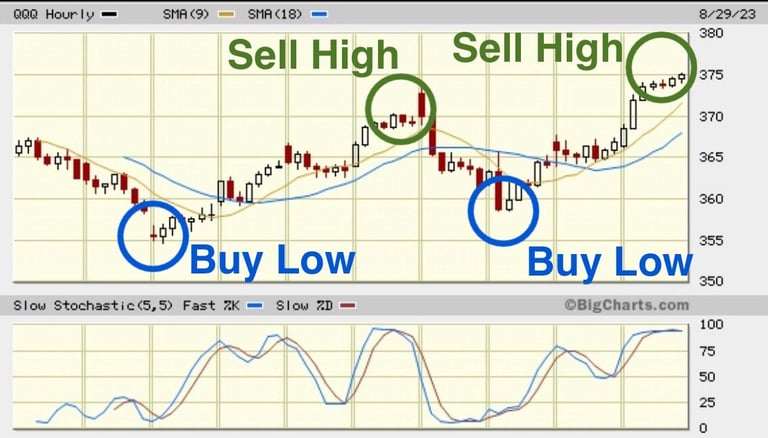
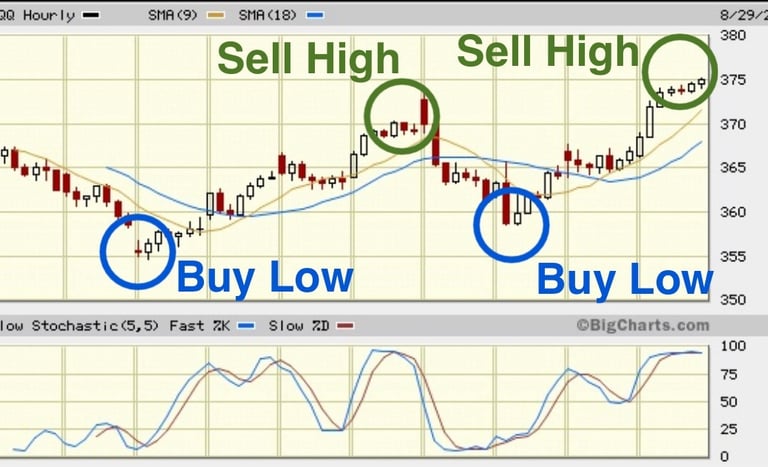
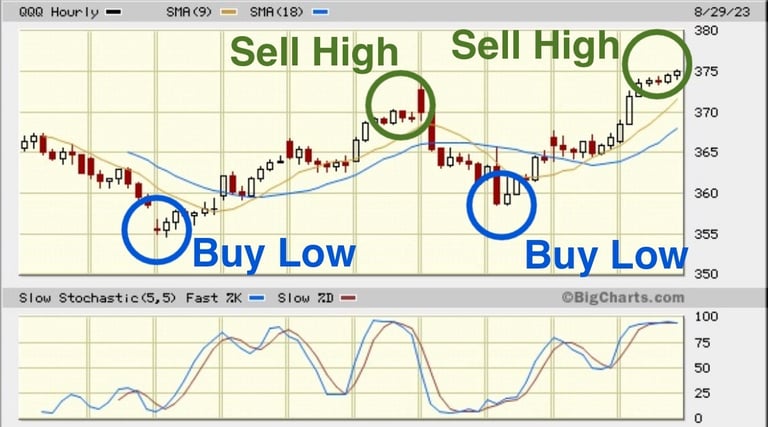
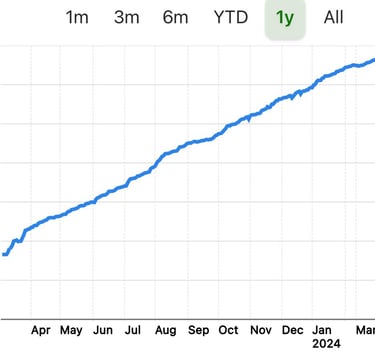
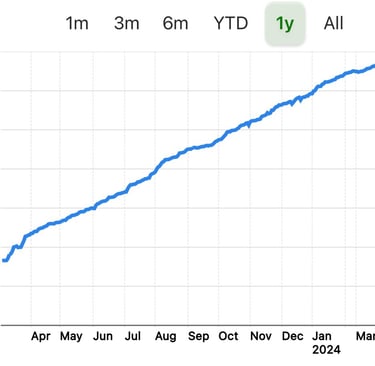
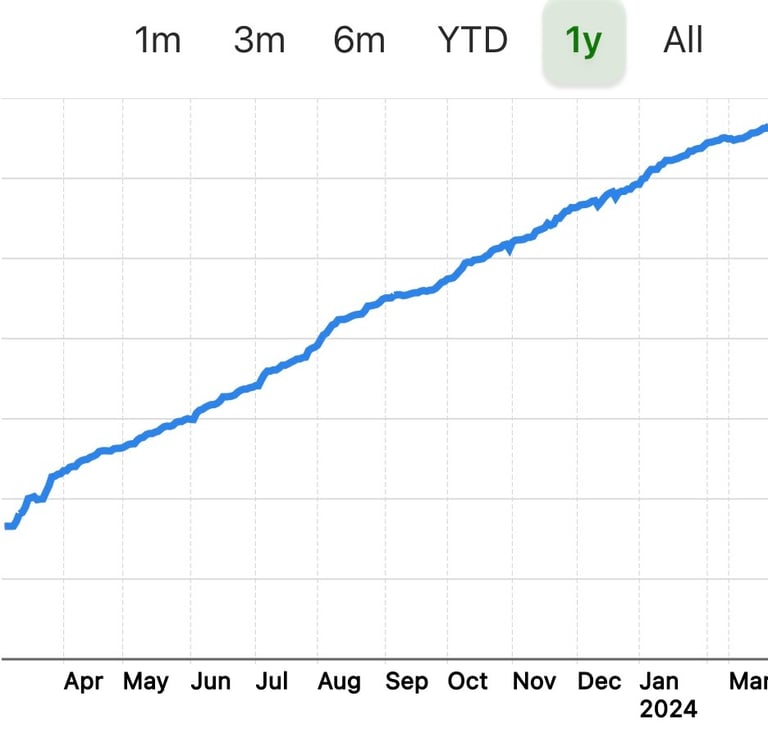
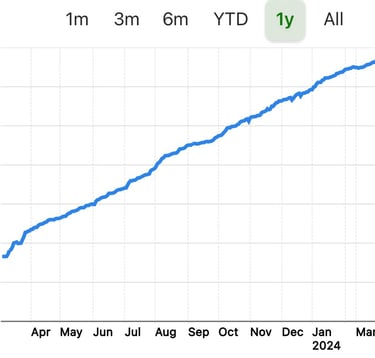
Figure 1: Author's Own Trade Account Balance. The Image is intended to show or depict Trade Consistency, which is possible for those who learn the METHODS of a Swing Trader.
Figure 1: Author's Own Trade Account Balance. The Image is intended to show or depict Trade Consistency, which is possible for those who learn the METHODS of a Swing Trader.
Contacts
charlie@whooph.com
Socials
(404) 455-1500
Google Ads Conversion